
Inland shipping crew shortage: how TMLG brings young crews on board
European inland shipping has a real crew shortage. Shipping companies are finding it hard to man their vessels with qualified boatmen, helmsmen and boatmasters, and this is already happening, not just a forecast.
Many experienced boatmasters and boatmen are close to retirement, and not enough young people are coming in behind them. Unless crews get younger, the problem will only grow. This article explains how TMLG Academy and TMLG Group tackle it.
Why inland shipping has a crew shortage
The crews on Europe's big rivers, such as the Danube and the Rhine, are ageing. Many experienced boatmasters will retire in the coming years, and in several countries companies are already missing boatmasters and boatmen today.
Moving experienced crew from one company to another does not solve this. New people have to be trained, and that takes years. That is why we start early, at school.
Younger crews as the answer
The solution our partners value most is a younger crew. We bring young, fully trained crew members on board, with all the courses, certificates and practical experience they need.
For your fleet, this means a new generation of crew members who bring energy and stability and want to stay in the job for the long term.
How the TMLG model works: schools, simulators, learning and working
Our model is built as one connected system:
- Recruiting young people: we reach out to young Czechs and Slovaks who are looking for a career with a future.
- Working with schools: we have built an education network that runs from primary and vocational schools to universities, closely linked to practice at TMLG Academy. It includes the secondary school of navigation in Děčín (SPŠ Děčín), the University of Žilina and TMLG Academy in the Czech Republic and Slovakia as the practical training centre. More schools are joining, and TMLG Group invests in them through classrooms, simulators and scholarships. Read more about our cooperation with SPŠ Děčín and the University of Žilina.
- Training and certification: from basic safety training to preparation for the UNION patent (Union certificate of qualification as boatmaster).
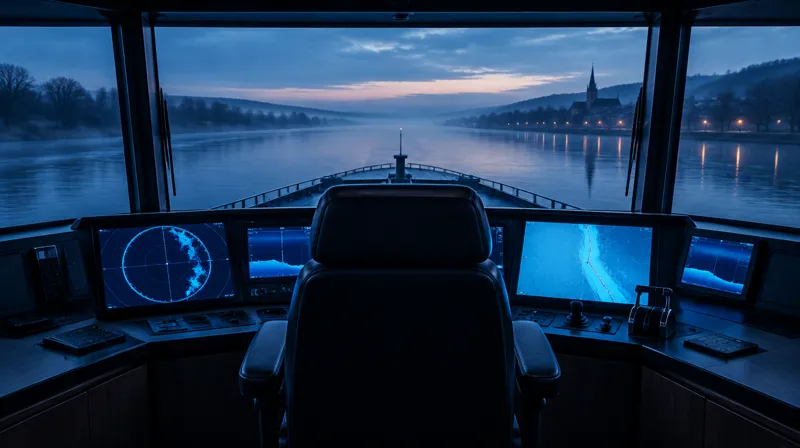
- Modern equipment: a certified ship-handling simulator in Hlohovec and simulator classrooms in Žilina and Děčín.
- Learning and working: trainees are permanently employed by TMLG Group from their first day, with a salary and real experience on board.
- Support: scholarships and investment in partner schools and infrastructure.
The result is a complete system in which theory and practice go hand in hand.
What shipping companies gain
- Immediate help: your vessels get trainees who count towards the minimum crew.
- A long-term solution: most young people stay in the fleet after their training.
- Younger crews: experienced crew members are joined by a generation that is only starting its career.
- Quality: our graduates are certified under current EU law and prepared for work on international waterways.
If you need crew now rather than in a few years, we also provide boatmen, helmsmen and boatmasters directly. More on that in our article on crew for inland vessels.
How to work with TMLG as a shipping company
The crew shortage is not a problem for the future. It is already here. Our response works because we built an education network with schools and universities and connect it directly with practice on board.
If you want a younger crew for your fleet, see what we offer on our partners page.
Frequently asked questions
Do TMLG trainees count towards the minimum crew?
Yes. Your vessels get trainees who count towards the minimum crew from the start.
Who employs the trainees?
Trainees are permanently employed by TMLG Group from their first day, with a salary. This applies to those who do not already work on a vessel of another company.
Which schools does TMLG work with?
Among others, the secondary school of navigation in Děčín (SPŠ Děčín) and the University of Žilina. TMLG Academy in the Czech Republic and Slovakia is the practical training centre.
Do the trainees stay after their training?
Most of them do. They stay in the fleet after completing their training.
Did you like this article? Pass it on.